The Difference Between Silk and Satin
Silk and satin are not the same thing, but it's easy to mix them up. Here we clear up the difference, why satin is almost always polyester, and what terms like "silk-like" and "silky feel" really mean.
The difference between silk and satin: everything you need to know
Silk or satin, which is which?
It's one of the most common questions when it comes to luxury textiles, and it's easy to mix them up. The answer, though, is simpler than you might think: silk and satin are not the same thing, but they're often used interchangeably to describe a material's feel. In this guide, we clear up the difference once and for all.
What is silk?
Silk is a natural material, a fabric made from the protein fibres of the silkworm's (Bombyx mori) cocoon. Silkworms spin their cocoons from a single continuous protein fibre that can be up to 1,500 metres long. It's this fibre that is then twisted and woven into what we call silk.
Since antiquity, silk has been associated with wealth and elegance. Silk was originally produced in China along the Silk Road, and the material remains one of the world's most sought-after natural textiles.
Properties of silk
- Natural sheen: silk reflects light in a characteristic, soft way
- Temperature-regulating: keeps you cool in summer and warm in winter
- Hypoallergenic: naturally resistant to dust mites and bacteria
- Durable with the right care: a well cared-for silk scarf can last for generations
- Light and soft against the skin: perfect for scarves, blouses and underwear
What is satin?
Satin is not a material, satin is a weaving technique. A satin weave means the warp (lengthwise threads) floats over several weft threads before being tied down, creating a surface with fewer interlacing points and more exposed fibre. The result is a fabric with an extremely smooth, glossy front and a duller back.
Satin can be made from many different materials:
- Polyester satin: by far the most common option. Cheap to produce, looks glossy, but lacks silk's properties
- Silk satin: satin woven from silk fibre (the most exclusive option, but uncommon)
- Acetate satin: semi-synthetic, often used in linings and wedding dresses
- Viscose: soft satin with a more natural feel but lower durability
The important thing to understand: when you come across a product simply labelled "satin" without the fibre specified, it's almost always polyester or another synthetic material. Genuine silk is an exclusive exception, and this should always be clearly stated on the label as "100% silk", "100% seta", or "100% silk".
Properties of satin weave
- High shine: a more metallic, distinct gloss than genuine silk
- Smooth surface: almost friction-free against skin and hair
- Can look plasticky: polyester satin often has a glossy, almost unnatural sheen in bright light
- Poor breathability: synthetic fibre traps heat and moisture against the skin
- Snagging: synthetic satin products easily develop tears and snags in the fabric
Silk vs. satin – comparison table
| Property | Silk | Satin |
|---|---|---|
| What it is | Natural material (fibre) | Weaving technique (construction) |
| Raw material | Silkworm cocoons | Viscose, polyester, acetate, etc. |
| Sheen | Subtle, natural lustre | High, almost plastic-like shine |
| Feel | Incredibly soft, resilient and light | Smooth and slippery |
| Price | High (luxury material) | Varies depending on fibre |
| Durability | Long-lasting with the right care | Varies by fibre, often shorter |
| Breathability | Very good | Limited (synthetic) |
Can satin be made of silk?
Yes, and it's the finest version you can buy. Silk satin combines silk fibre's natural properties with satin weave's characteristic sheen and smoothness. It's often used in exclusive dresses, wedding garments and high-quality blouses.
When you see "100% silk" on a label, it can therefore still be satin-woven; it's about the fibre, not how it's woven.
"Silk-like", "silky feel" and other misleading marketing terms
There's a reason many brands write "silky feel", "silk-like finish" or "soft as silk" in their product descriptions, but never "100% silk": it isn't silk.
These phrases are marketing terms that imply a luxury they don't deliver. Behind the words is almost always polyester, polyamide (nylon), or other synthetic fibres treated to imitate silk's sheen and softness.
Common phrases to watch out for:
- "Silk-like" – synthetic material, usually polyester
- "Silky feel" – polyester or viscose
- "Satin finish" – satin-woven, but the fibre isn't mentioned (= likely synthetic)
- "Soft as silk" – the comparison itself gives away that it's not silk
- "Faux silk" / "artificial silk" – explicitly synthetic material
- "Satin" with no fibre specified – assume polyester until proven otherwise
Genuine silk needs no dressing up. Brands that work with genuine silk state it plainly: 100% silk, 100% natural silk, or 100% mulberry silk, and are happy to share origin and weaving technique. Everything else deserves a second look. The price tag is often a quick indicator of whether you're looking at genuine silk or a synthetic imitation.
Rule of thumb: If the label doesn't say "100% silk" – it isn't silk.
The difference in practice: scarves and accessories
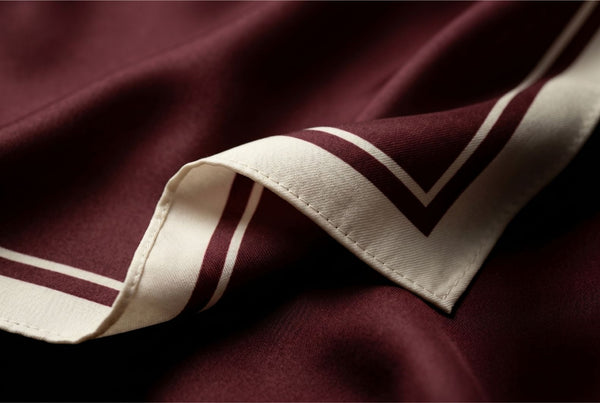
When it comes to silk scarves, the choice of material is decisive for the experience. A scarf in genuine silk, whether twill-woven or satin-woven, has a sheen and a natural drape that polyester satin can never replicate.
That's exactly why we at ELOÉ work exclusively with 100% Como silk from Como in northern Italy, known since the Renaissance as the world's centre for luxury silk manufacturing. A scarf in genuine silk:
- Drapes more beautifully around the neck and shoulders
- Ages with dignity – develops a patina rather than wearing out
- Feels cool against the skin – not sweaty, not clingy
- Holds colour better – the natural fibre's surface structure binds pigment more permanently
- Doesn't snag as easily as synthetic materials
How do you recognise genuine silk?
There are a few simple ways to tell genuine silk apart from an imitation:
1. The burn test Burn a small thread. Genuine silk smells like burnt hair and leaves a crumbly, grey-black powder. Polyester smells plasticky, melts, and leaves a hard bead.
2. The ring test A genuine silk scarf can usually be pulled through a wedding ring, thanks to the extreme fineness and softness of the silk fibre.
3. The price point A high-quality scarf in genuine silk costs what it costs. If you come across "100% silk" at bargain prices, it's worth questioning the origin and quality.
4. The feel against your skin Genuine silk warms up quickly from your body heat. Polyester satin stays cool (or cold) and can feel clammy.
Frequently asked questions about silk and satin
Is satin more expensive than silk?
Usually not. Satin is a weaving technique and can be made from cheap synthetic fibre. Genuine silk is always more expensive than polyester satin, while silk satin (satin woven from silk fibre) is one of the most expensive options on the market.
Which material is best for a scarf?
For a scarf that's worn often and needs to last, 100% natural silk is the best choice. Twill-woven silk, as used in classic scarves, is especially robust and holds its shape well.
Are silk and satin good for your hair?
Both materials reduce friction against hair compared to cotton, which can reduce breakage and static. Genuine silk, however, is more moisture-regulating and gentle over time.
How do you wash silk?
Hand wash in cold or lukewarm water with a gentle detergent. Avoid wringing the fabric, let it dry flat. Iron on low heat on the reverse side. Read our complete guide here.
Summary
- Silk = a natural material made from the silkworm's protein fibre
- Satin = a weaving technique, usually polyester
- Silk satin = satin woven from silk fibres, exclusive and always labelled "100% silk"
- "Silk-like", "silky feel", "satin finish" = marketing terms for synthetic material
- Genuine silk is most easily identified by the label, the burn test, and the feel against your skin
Next time you're shopping for a scarf or blouse, don't settle for "satin" or "silky feel". Ask: what is the fibre? The answer should be short and clear: 100% silk. Anything else is an imitation.
ELOÉ is a Swedish brand for luxury silk scarves woven and hand-rolled in Como, Italy. We work exclusively with 100% natural silk to give you an accessory that lasts and improves with time.
Gå med i The Silk Edit
Fritt att läsa. Medlemskap ger nya guider först och 10% på första köpet.